Part of the Backyard Transformation Series
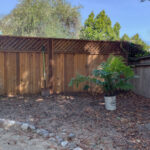
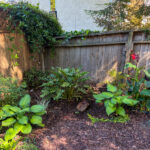
Once the plants I’d been adding to the perimeter started to look established and the planting had real presence, I added mulch. Timing matters here — mulching around established plants that are already improving the soil beneath them is the most effective approach.
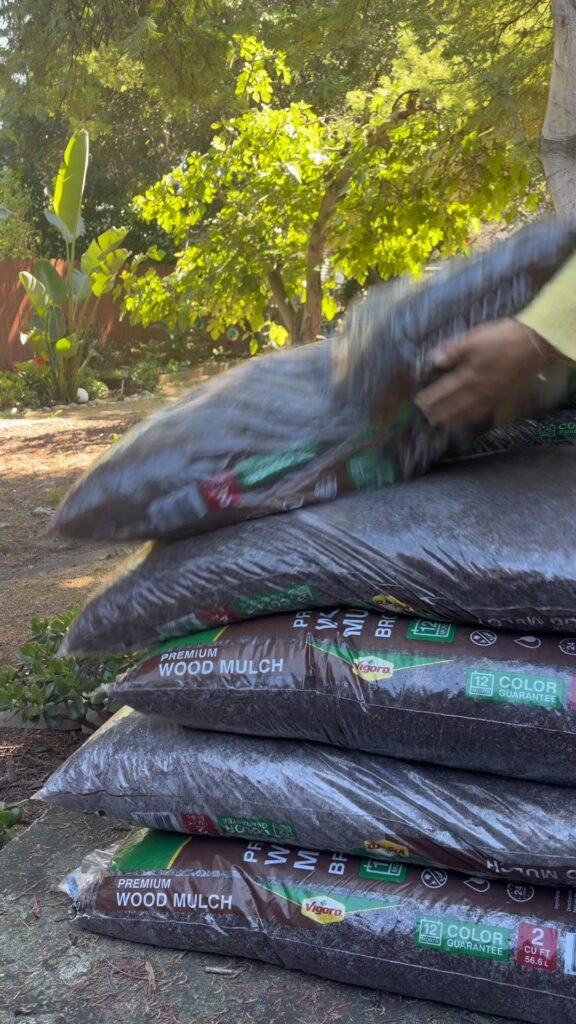
It took 12 bags of dark bark mulch to cover the full perimeter. Here’s why I did it and what it changed.
Why Mulch
Mulch is one of the most researched and practical things you can add to a garden. For a perimeter that started as compacted soil, it works on several levels at once.
Moisture retention. Wood chip mulch reduces evaporation from the soil surface, which matters a lot during Oakland’s dry summers. Research shows wood chip mulch can increase soil water retention by up to 30%. For plants still getting established, that consistent moisture is really valuable.
Weed suppression. Mulch blocks sunlight from reaching the soil, which prevents most weed seeds from germinating. Depth matters — Washington State University Extension research shows a layer of 4 to 6 inches effectively controls weeds. I aimed for 3 to 4 inches across the perimeter and weeding has been minimal since.
Soil health over time. As wood chip mulch breaks down it adds organic matter to the soil, promotes microbial activity, and improves soil structure. For compacted soil, that slow remediation happening beneath the surface is really meaningful.
Temperature regulation. Mulch insulates soil, keeping it cooler in summer and warmer in winter — which buffers plant roots from the temperature swings that stress established plants and slow new ones from settling in.
What I Used
I used a dark brown bark mulch, available in bags at Home Depot. The dark color made an immediate visual difference — it unified the perimeter, made the plants pop, and gave the whole fence line a cleaner, more finished look.
For reference: 12 bags covered the full perimeter of this large yard. If you’re estimating for your own project, one standard 2 cubic foot bag covers roughly 8 square feet at 3 inches deep. Measure your perimeter length and width before buying — it saves extra trips!
How I Applied It
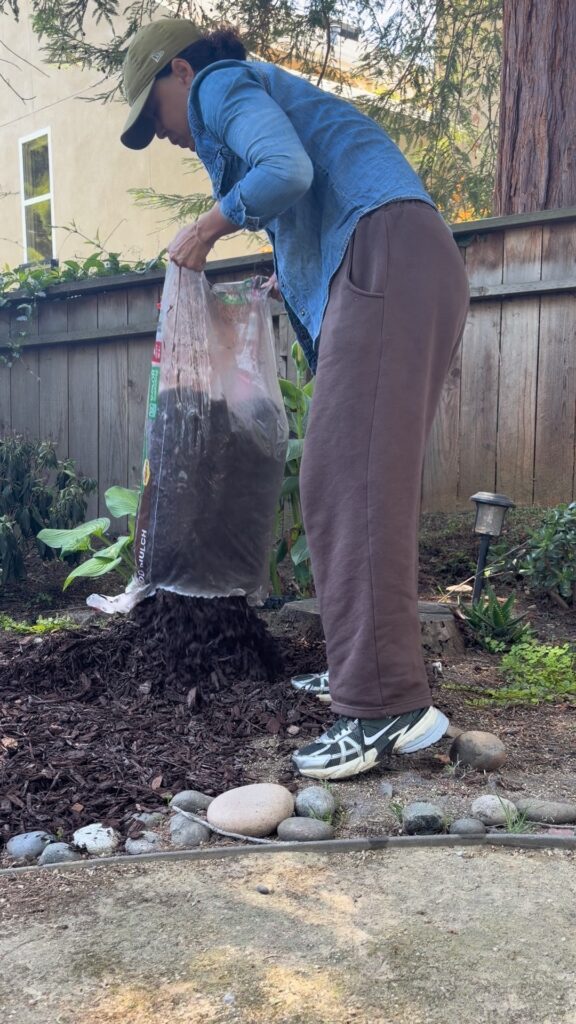
I raked out debris first, then spread the mulch in an even layer, keeping it a few inches away from the base of plant stems. Mulch piled directly against stems traps moisture and can cause rot over time, so a small gap around each plant is worth paying attention to.
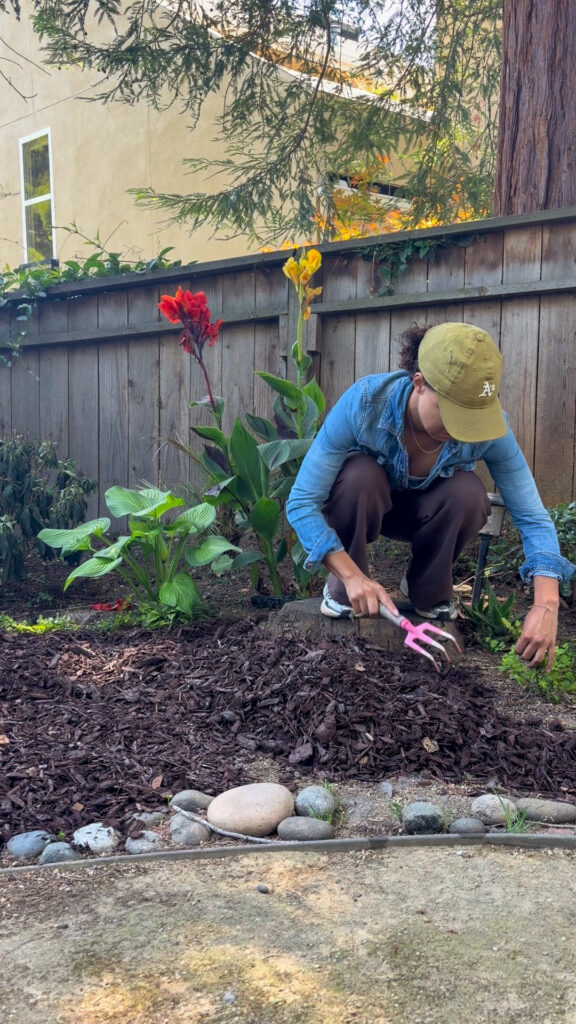
The river rock border along the patio edge keeps the mulch contained and creates a clean visual boundary between the garden and the hardscape. That edge detail really pulls the whole perimeter together.
What Changed
The visual difference was immediate. The perimeter went from an in-progress planting to something that looked finished and cared for. Plants that were already doing well looked significantly better with clean, dark mulch around them.
Functionally, watering became more efficient — the soil stays moist longer between waterings, which has been especially helpful during dry stretches. And maintenance time went down too.
A Few Practical Notes
Aim for 3 to 4 inches of depth. That range gives you solid weed suppression and moisture retention while keeping good air circulation at the soil level.
Plan to replenish once a year. Wood chip mulch breaks down over time — that breakdown is part of what makes it beneficial for soil health — and topping up the layer each season keeps it working well.
This post is part of my Backyard Transformation Series. Read the series overview here, or head to the next post: Replacing a Struggling Shrub With the Hope Philodendron.
Have questions about how much mulch you need? Drop them in the comments!