As I tend to my garden, I’m sharing an update about some of the produce I have growing. I’m growing corn, sugar snap peas, and green onions for the first time, and returning to tomatoes for a second season. Mint is a year-round staple in my garden at this point. I’m excited to see how everything progresses this summer.

Snap Peas
Snap peas are the furthest along of everything in the bed. I’ve already pulled several handfuls off the vine and the pods are plump and crisp at harvest. Snap peas are a cool-season crop that performs best before summer heat sets in. In Oakland’s zone 10a, that window runs roughly March through June, so we’re at peak snap pea season right now. If you’re planning for next year, get them in the ground early spring.

Corn
The corn has tasseled and pollination is actively underway. The tassel at the top of each stalk releases pollen that travels down to the silks on each developing ear. Each silk strand connects to one kernel inside the cob, so good pollination means a full ear. Once the silks brown and dry out, the ears are close to ready. Growing corn in a raised bed gives the root system the deep, loose soil it needs to support those tall stalks.
Tomatoes
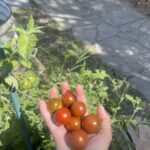
The tomatoes are green and steadily sizing up. This is my second season growing them and they’re planted from seedlings, a couple months in. Most varieties take 60 to 85 days from transplant to first ripe fruit, putting harvest on track for mid-to-late summer.

Mint
Mint is a year-round grower in my garden and is filling up one of the raised beds nicely. I use it frequently in the kitchen so it’s welcome, but mint does spread aggressively through underground runners. Check out this full post on growing mint for tips on keeping it contained and making the most of it as a beginner herb.
Green Onion
Green onions are a cut-and-come-again crop, meaning you harvest the tops and the plant continues producing from the base. They’re compact, low maintenance, and have been a steady presence in the bed since early spring. A good option if you’re looking to add something edible that requires minimal effort to maintain.
Caring for My Crops
My watering routine is hand watering with a watering can every other day. For raised beds, consistent moisture is important — the soil in raised beds drains faster than in-ground planting, so they dry out more quickly, especially as summer temperatures climb. Every other day keeps things steady without overwatering.

At the start of the season I applied fertilizer to give everything a nutritional foundation going into the growing season. Vegetables are heavy feeders, and raised bed soil benefits from that early boost since nutrients can deplete faster in a contained environment.
The snap peas are staked, which keeps the vines upright and makes harvesting easier as the pods develop. Peas are natural climbers — they use tendrils to grip and grow vertically, so giving them something to attach to helps the plant direct its energy into pod production.