Part of the Backyard Transformation Series
Transforming my backyard took time and happened in waves. Adding new plants to a mostly bare border really changed the look and feel of my space. The ground along the fence line was compacted soil — just the edges of the yard, never really treated as a garden. I decided to change that, and for a couple of months I focused on collecting the right plants and getting them in the ground.
Here’s how I approached it.
Start With the Light
Before I bought anything, I paid attention to how light moved across the perimeter throughout the day. That one thing shaped every decision that followed.
The back fence stretch gets significantly more sun than the corners. The left back corner stays shaded for most of the day, sheltered by neighboring trees and the fence. Two different environments, same perimeter — and they need different plants.
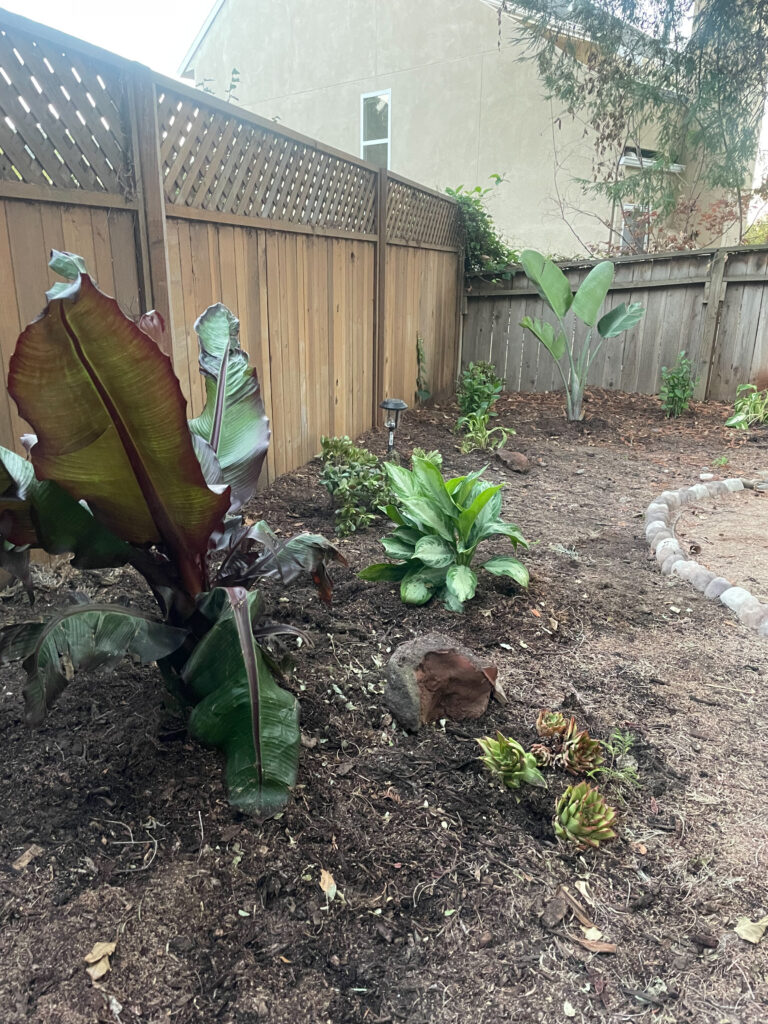
I focused tropical, shade-tolerant plants in the shadier sections and saved the sun-loving plants for the stretch of fence that gets more direct light. Getting that match right is the most important thing you can do when starting a new planting.
Collecting Plants Over Time
I added plants gradually over a couple of months rather than buying everything at once. It gave me time to research before committing, let me see how early additions filled the space, and honestly spread out the cost too.
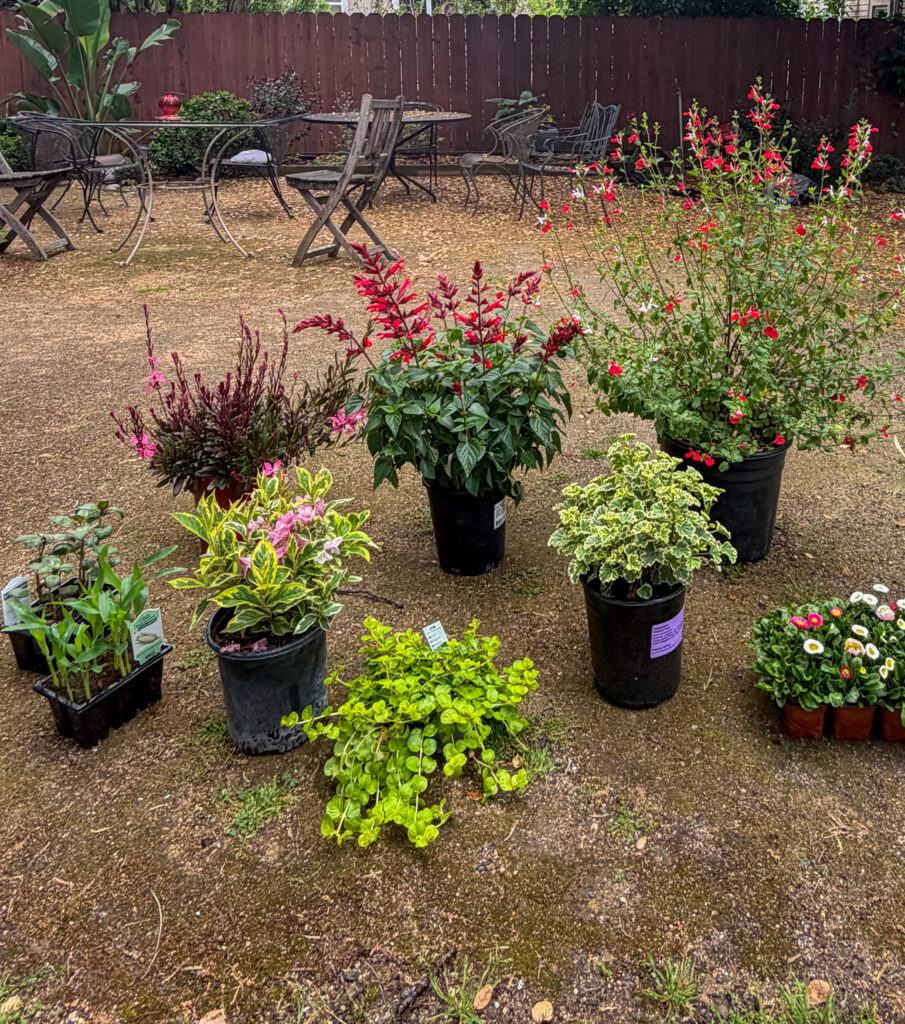
Here’s what I planted:
• Hostas — broad, variegated foliage that thrives in low light and is really reliable in Oakland’s climate
• Hope Philodendron — added later to replace a struggling shrub (more on that in the next post)
For the sunnier back fence stretch:
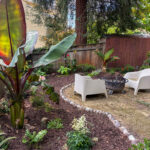
• Banana tree — the tall anchor for the whole perimeter, dramatic and fast-growing in the Bay Area
• Canna lily — tall, bold foliage with vivid red blooms, reliable in zones 8-11
• Red salvia — upright spikes of deep red blooms, a great mid-height plant that pollinators love
• Autumn sage (Salvia greggii) — smaller, more delicate red flowers on an airy shrub, blooms for months
• Weigela — dark burgundy foliage with soft pink flowers, adds great color contrast
• Variegated euonymus — bright yellow-green variegated leaves, great for filling in and adding light to a border
• Creeping Jenny — low, trailing chartreuse foliage that spreads along the front edge and adds a pop of color at ground level
• Bellis daisies — small pink and white daisy blooms, cheerful and easy along the front edge
Building in Layers
I kept one framework in mind as I added each plant: tall at the back, mid-height in the middle, lower plants at the front edge. That variation in height is what makes a perimeter look full and intentional rather than flat.
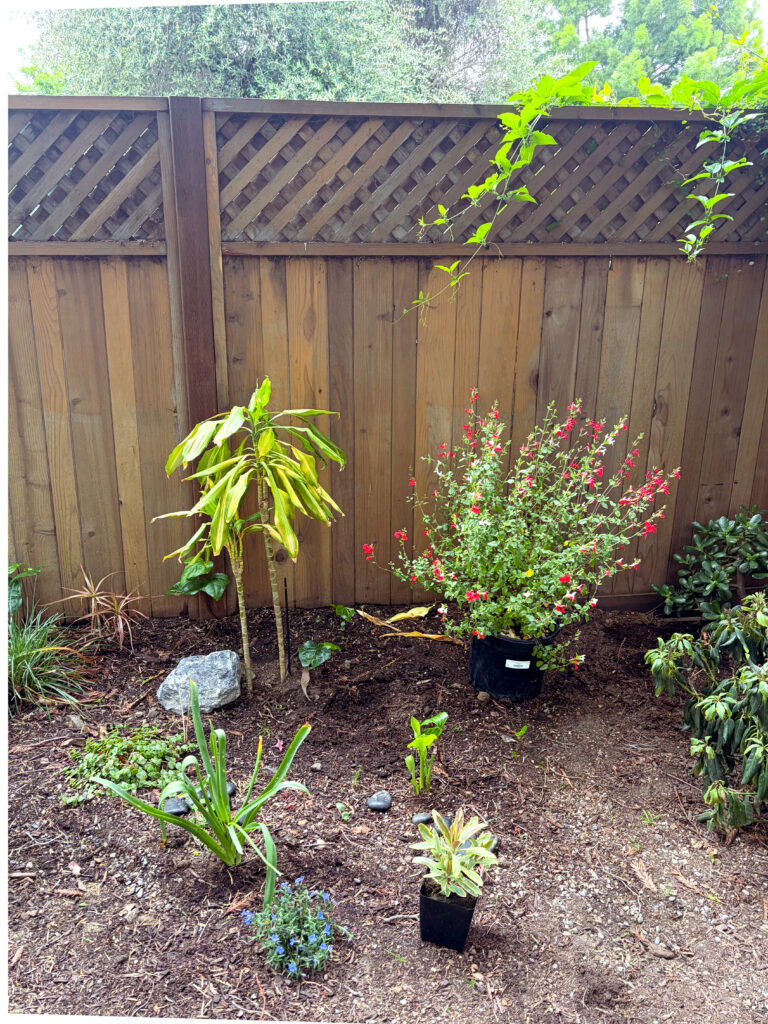
The banana tree anchors the back — at full height it reaches 10 to 20 feet depending on variety, and those big leaves create a backdrop for everything in front. Canna lilies at 4 to 6 feet fill the mid-back layer. Astilbe, hostas, and succulents work along the front edge, staying low enough to keep the taller plants visible behind them.
Even early on with gaps in coverage, the height variation creates a sense of depth that makes the space feel further along than it is.
Lean on Foliage
With varied light conditions across the perimeter, I leaned on foliage color and texture rather than counting on consistent flowering. Flowers are seasonal. Foliage is there every day.
The contrast between the banana tree’s enormous smooth leaves, the hosta’s ribbed broad leaves, the canna lily’s dark burgundy-green, and the fine texture of the astilbe plumes creates visual interest through foliage alone. When the canna lily does flower — vivid red on a tall stem — it’s a great bonus on top of an already interesting composition.
Staying On Top of Care
As I added plants I got more consistent about basic care: watering more regularly, adding fresh soil when I planted something new, checking in on how things were settling. The compacted soil needed amending — I worked garden soil into each planting hole and around new additions as I went.
That attention early on is a big part of why things have filled in well. A new planting in compacted soil benefits from more consistent care in that first season.
Notes based on my experience
Buy plants suited to the actual light conditions. Add them gradually. Prioritize foliage plants that look good year-round. Build in height variation from the start.
The perimeter started as bare ground and is now a layered, lush stretch of garden that looks better every month. The plants were the foundation — everything else built on top of that.
This post is part of my Backyard Transformation Series. Read the series overview here, or head to the next post: Polishing Touch on Backyard Update: Mulch With Me.
What are you planting along your fence line this season? Share in the comments!
SEO tags: perimeter garden planting, layered garden design, how to start a garden bed, fence line planting ideas, tropical plants Oakland, shade garden plants, banana tree garden, canna lily planting, hosta shade garden, Bay Area garden ideas