This post contains affiliate links.
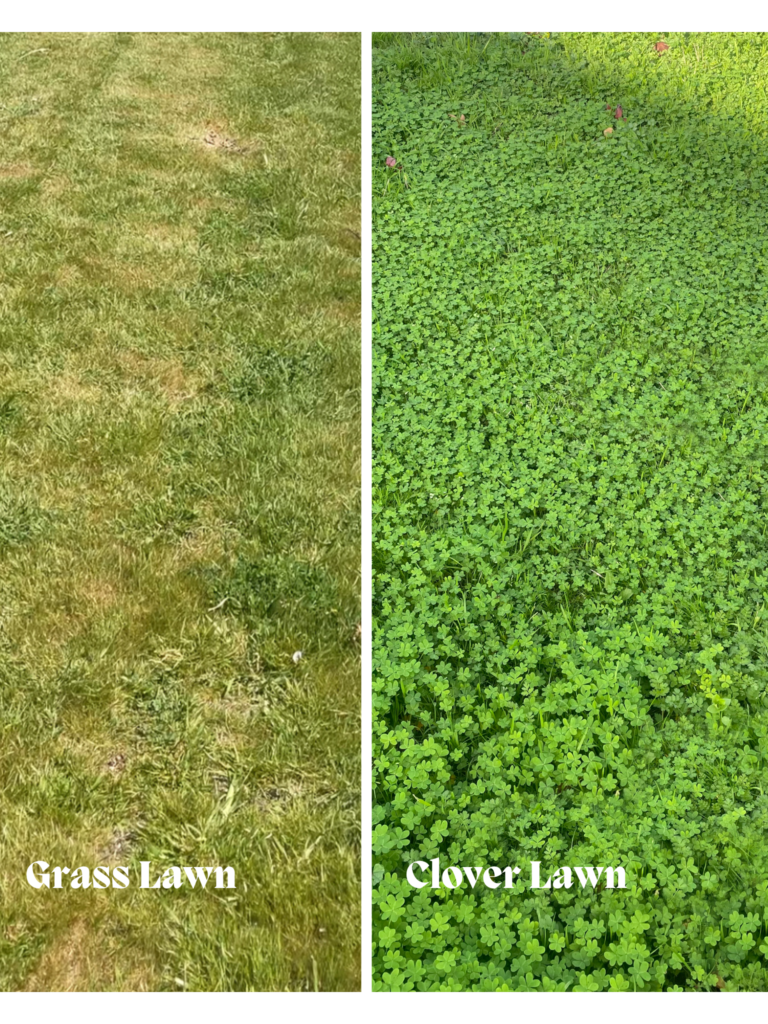
Grass lawns are high maintenance by design. They need regular mowing, consistent watering, seasonal fertilizing, and ongoing attention to stay looking the way most people want them to look. Clover offers a different proposition — a low-growing, self-fertilizing, drought-tolerant ground cover that stays green through a California summer with a fraction of the water and almost none of the upkeep.
The shift toward clover lawns has been building for a few years, and in a drought-prone state like California, the reasoning is practical as much as aesthetic. Here’s what to know before making the switch.
Why Clover Works Better Than Grass in California
Water. Clover is significantly more drought tolerant than traditional turf grass. Once established, it stays green through dry spells that would leave a grass lawn brown and stressed. For Zone 9 gardens dealing with long dry summers, this is the most important advantage.
Fertilizer — or the lack of it. Clover is a nitrogen fixer, which means it pulls nitrogen from the air and deposits it into the soil through its root system. A clover lawn fertilizes itself and enriches the soil around it over time. Grass requires regular nitrogen fertilizing to stay healthy and green.
Mowing. Clover grows to about 4–6 inches and stays there. It can be mowed occasionally for a tidier look, but many clover lawns go weeks between mowing without looking neglected. Grass requires mowing every 1–2 weeks through the growing season.
Pollinators. Clover blooms attract bees and beneficial insects consistently through the growing season. A clover lawn becomes a working part of the garden ecosystem rather than a monoculture that supports very little wildlife.
Cost. Clover seed is relatively inexpensive and covers a large area. Compared to the ongoing cost of grass fertilizer, water, and lawn care, the long-term savings are significant.
Which Type of Clover to Plant
White clover (Trifolium repens) is the most popular choice for lawn replacement. It stays low, spreads readily, tolerates foot traffic reasonably well, and produces the classic small white blooms that pollinators love. This is the right starting point for most home lawns.
Microclover is a smaller-leafed variety of white clover bred specifically for lawn use. It produces fewer flowers (which means fewer bees underfoot if that’s a concern), grows even lower than standard white clover, and blends well in mixed lawn situations. A good option for higher-traffic areas or anyone who wants a more refined look.
Red clover (Trifolium pratense) grows taller and is better suited to meadow-style plantings than traditional lawn replacement.
For a California backyard lawn replacement, white clover or micro clover are the practical choices.
How to Plant a Clover Lawn
Full replacement — removing existing grass and starting with clover — gives the cleanest result and the fastest establishment. Overseeding into an existing lawn works for a gradual transition and requires less initial effort.
For full replacement:
- Remove existing grass by smothering with cardboard or landscape fabric for 4–6 weeks, or by using a sod cutter
- Loosen the top 2–3 inches of soil with a garden fork or tiller
- Fill in with a light layer of compost if the soil is compacted or poor
- Broadcast Clover seed at the recommended rate (typically 2–8 oz per 1,000 sq ft for white clover)
- Rake lightly to press seed into contact with the soil
- Water consistently until germination — clover germinates in 7–15 days
For overseeding into existing lawn:
- Mow the existing lawn short
- Scarify or rake to expose some bare soil
- Broadcast clover seed across the area
- Water regularly until established
Clover establishes fastest in spring or early fall when temperatures are mild. In Zone 9, both windows work well.
Want More on Clover? Check Out my clover growth journal, showing my entire experience.
What to Expect After Planting
Clover establishes quickly compared to most ground covers. Within a few weeks of germination, the coverage begins filling in. By the end of the first season, a well-seeded clover lawn looks lush, dense, and — most noticeably — genuinely green without the water requirements of grass.
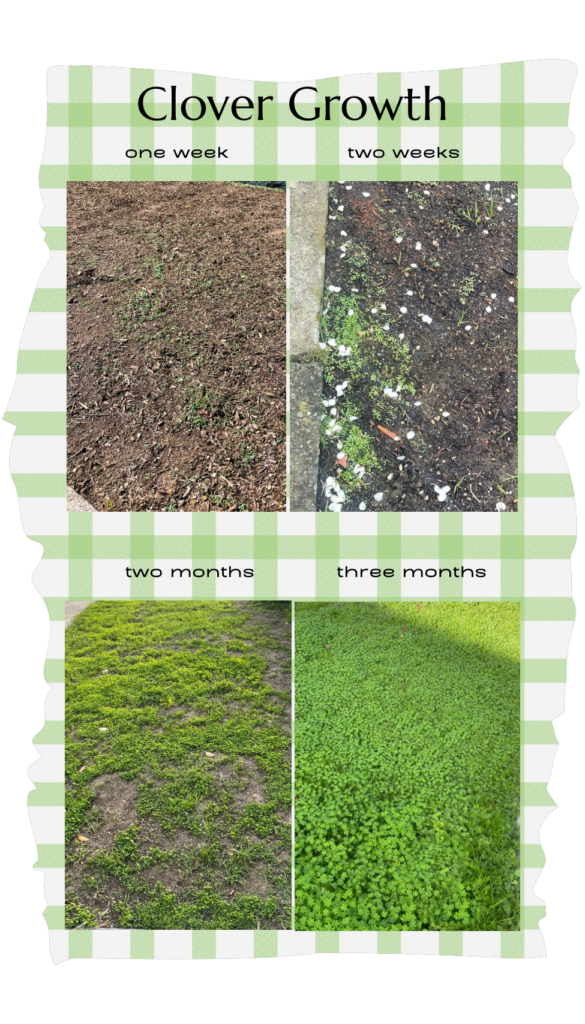
The blooms arrive in spring and summer and attract pollinators consistently. If the bee activity is a concern for barefoot use, mowing before the blooms fully open keeps the lawn tidy and reduces bee traffic.
One honest note: clover does show wear in very high-traffic areas over time. For pathways or spots with constant heavy foot traffic, pavers or stepping stones work better as a companion solution alongside the clover.
Clover and the Broader Low-Maintenance Garden
A clover lawn pairs naturally with the low-water, low-maintenance planting approach that works so well in California. Surrounded by drought-tolerant border plants, anchored by dark mulch in planted areas, and edged cleanly against hardscape, a clover lawn reads as a deliberate design choice — which it is.
The lawn stops being the most demanding part of the garden and starts being one of the easiest.
Quick Reference: Clover vs. Grass
| Clover | Grass | |
|---|---|---|
| Water needs | Low once established | Moderate to high |
| Fertilizer | Self-fertilizing | Requires regular feeding |
| Mowing | Every few weeks | Weekly during growing season |
| Cost to maintain | Very low | Moderate to high |
| Pollinator value | High | Low |
| Drought performance | Strong | Poor without irrigation |