Key Takeaways
- Foot width and calf width are different measurements, so one does not automatically solve the other.
- Measuring before ordering makes it easier to compare styles and size charts.
- Shaft height, toe shape, heel design, and closures all influence comfort.
- The best boot should suit your usual outfits, walking needs, and local weather.
- A secure fit should not cause pinching, numbness, sharp rubbing, or a strained zipper.
Great boots should do more than complete an outfit. They should leave room for your toes, feel secure at the heel, sit comfortably around your calves, and make sense for how you actually move throughout the day. A pair that looks perfect but pinches, slips, or requires you to fight the zipper will probably stay in the closet. Shoppers who need added room through both the foot and lower leg can use boots for wide calfs as a useful comparison point. Torrid is a plus-size fashion retailer serving online and in-store shoppers in the United States, and its boots and booties collection includes extra-wide-width footwear along with tall styles filtered by wide-calf and extra-wide-calf options. That combination makes the collection helpful when comparing the separate fit needs of the foot and shaft.
Why Boot Fit Deserves More Attention
A boot can fit well at the toes and still feel too tight around the calf. It can also have enough calf room while crowding the forefoot or pressing against the top of the foot. For example, someone may need a rounded, roomy toe box but does not need a wider, taller boot shaft. Treating every fit issue as a reason to size up can create heel slipping and make walking less stable. Comfort also depends on the whole design, not a single label. The footwear guidance from the American Podiatric Medical Association emphasizes measuring both feet, trying shoes with the socks you expect to wear, and walking in them before deciding they are right for you.
Measure Before Shopping
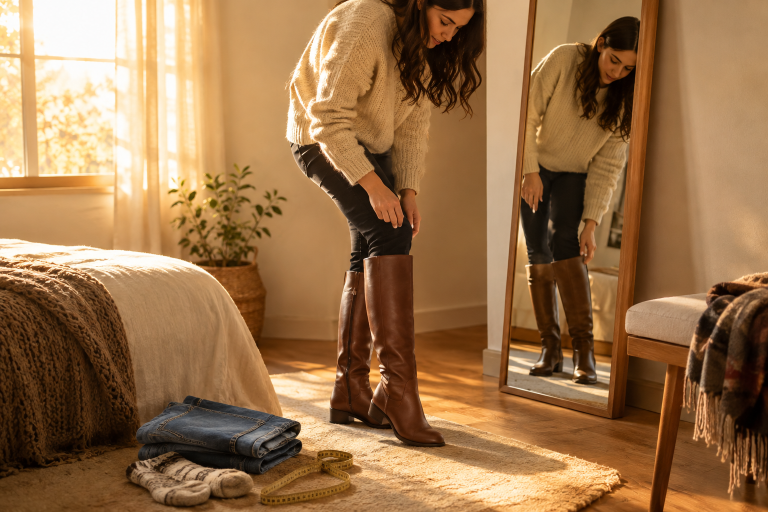
Take measurements while standing naturally on both feet, ideally later in the day when feet may feel slightly fuller. Wear the socks, tights, or leggings you most often pair with the boots.
- Measure foot length and width separately.
- Measure around the fullest part of each calf.
- Write down the larger calf measurement.
- Note whether you plan to tuck jeans, thick leggings, or socks into the shaft.
- Compare your numbers with the measurements listed for the individual style.
Terms such as “wide,” “wide calf,” and “extra wide calf” can mean different things across styles. Product-specific details are more useful than relying on the label alone.
Know The Main Parts Of A Boot
- Toe box: The front should allow toes to rest and move without being compressed.
- Instep: The upper should not create painful pressure across the top of the foot.
- Shaft: This is the section that rises above the ankle, and its height affects where the boot lands on the leg.
- Calf opening: This is especially important for knee-high and over-the-knee styles.
- Heel and outsole: Heel shape affects balance, while the sole influences grip and flexibility.
Match The Boot Style To The Day
Ankle Boots For Everyday Versatility
Ankle boots work easily with straight-leg jeans, cropped pants, skirts, and casual dresses. A flat or low heel is often practical for errands, commuting, and longer walks, while a side zipper can make everyday wear quicker.
Knee-High Boots For Layered Looks
Knee-high boots pair naturally with sweater dresses, leggings, skirts, and fitted jeans. Check both shaft height and circumference. A shaft that feels comfortable on one person may hit a different point on another person’s calf, depending on leg length.
Western, Combat, Lug, And Heeled Boots
Western boots suit denim, casual dresses, and concert outfits. Combat and lug styles add weight and structure to leggings, cargo pants, and oversized layers. For dressier plans, block heels and stacked heels usually offer a broader base than narrow heels. Consider how long you will be standing before choosing the height.
Choose Features That Support Comfort
- Look for a cushioned footbed if you will be on your feet for long periods.
- Consider stretch panels when you want a more forgiving fit through the calf.
- Choose laces when adjustable tension around the ankle is useful.
- Check zipper placement and make sure the closure can fasten without force.
- Favor a roomier toe shape if pointed styles usually crowd your forefoot.
- Select textured soles when wet pavement, uneven paths, or slick surfaces are part of your routine.
Think About Weather, Color, And Wear
Do not assume every winter-looking boot is built for snow or heavy rain. Read the product description for water resistance, lining, traction, and care instructions. Leave enough room for the socks you will actually wear in colder weather. Black boots coordinate easily with blue denim, grey, jewel tones, and all-black outfits. Brown, tan, and cream boots work well with olive, rust, warm neutrals, plaid, floral prints, and relaxed fall layers. Choose a color that works with several pieces you already own, not just one planned outfit.
Test The Fit Before Keeping The Pair
- Try on both boots indoors on a clean surface.
- Wear your intended socks or tights.
- Walk, sit, stand, and bend at the ankles.
- Notice whether the heel lifts excessively or the toes feel restricted.
- Zip or fasten the boot without pulling hard on the closure.
Some materials may soften with normal wear, but breaking in should not be expected to fix a major sizing problem. Serious pressure, numbness, sharp rubbing, or deep marks are signs that you should reconsider the fit.
Common Boot-Shopping Mistakes
- Buying a larger shoe size in an attempt to gain calf room.
- Ignoring shaft height and where the top edge will sit on the leg.
- Assuming every wide-calf style has extra room through the foot.
- Choosing a high heel for a day that involves extensive walking.
- Expecting stretch material to correct an otherwise incorrect size.
Choose The Pair You Will Actually Wear
The right boot is not necessarily the most dramatic or trend-focused option. It is the pair that accommodates your foot shape, fits your calf comfortably, matches your routine, and works with your weather and wardrobe. Measure first, read the details, and prioritize the fit that makes you want to reach for the boots again and again.
Conclusion
Choosing the right boots is about more than finding a style you like. A comfortable pair should fit your foot and calf separately, allow enough room for movement, and suit how you plan to wear them. Taking accurate measurements, checking style-specific sizing, and considering features such as toe shape, shaft height, closures, traction, and heel design can make shopping easier. It is also important to think about your usual outfits, walking habits, and local weather before making a purchase. Whether you prefer ankle boots, knee-high styles, western designs, or heeled options, the best pair is one that feels secure without causing pressure or discomfort. With careful measuring and realistic expectations about fit, you can find boots that are comfortable, practical, and worth wearing regularly.